 Centering Equity enables CAM to focus on collaborating with and providing resources for underrepresented museum workers throughout the state of California. Through demographic surveys and focus groups, CAM identified three groups as underrepresented and undersupported: Black, Indigenous, and People of Color (BIPOC) museum workers, emerging museum professionals (EMPs), and museum workers in rural locations. Those who identify with any of these groups often receive limited resources and/or are the most affected when uncertainty occurs in the field. For definitions of these groups, please see our Equity Toolkit.
Centering Equity addresses a critical need in the museum field to cultivate museums that are more diverse, more relevant, and better prepared to authentically address these same significant concerns in California’s communities. Centering Equity addresses goals two and three directly from CAM’s Equity Action Plan.
Upcoming Programming
WORKSHOP SERIES
Sustaining Yourself and Your Work in Museums: a Personal and Professional Retreat
Museum work can be incredibly rewarding; it has the power to educate, inspire, and strengthen our communities. It also asks a great deal of the people who do it. Amid shifting priorities, limited resources, systemic inequities, and the emotional labor of caring for others, it can be difficult to find space to reflect, reconnect with what matters most, and sustain ourselves over time.
This four-part series offers dedicated opportunities to pause, reflect, and move forward with intention. Through guided reflection, practical exercises, and conversation with peers, participants will explore different aspects of sustaining themselves and their work. Rather than focusing solely on individual resilience, we’ll also consider how the realities of museum work shape our ability to thrive, and how sustaining ourselves and one another strengthens our capacity to build museums where both people and communities can thrive. Participants are welcome to attend one workshop or all four. Registration is now open. Register below to secure your spot.
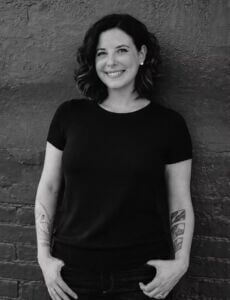
This series will be led by coach, facilitator, evaluator, strategist, and change-maker, Kate Merrick. Kate (they/them/she/her) is the Founder & Principal of ExposeYourMuseum LLC. With over a decade of experience, through their company, Kate helps museums get out of their own way– and on to amazing things by prioritizing and facilitating honest conversations, elevating marginalized voices, building capacity, engaging creatively, and strong, clear communication to inspire innovation, inform strategy, and drive decision-making.
Kate provides 1-on-1 and team coaching, leadership development, facilitation, restorative practice design, and advocacy-focused evaluation consulting with a singular purpose: to help mission-driven organizations and values-led individuals better understand and connect with their current and potential collaborators, teams, communities, clients, audiences, and—importantly—themselves.
Centering Equity Programming
During the past few years, CAM hosted four learning opportunities through this initiative, including roundtable discussions, workshop series, networking opportunities (virtual and in-person), and a mentorship program. Each one of these programs is designed to be a resource for those who need it. Our roundtable discussions and workshop series address DEAI head-on in different ways, whether that's the perspective of the collections department or the front-line staff. Through Centering Equity, CAM provides diverse programs for the entire California museum community.
Roundtable Discussions
Roundtable Discussions are highly participatory programs in a small group setting that focus on sharing ideas on a specific topic. They feature one facilitator who introduces the topic and leads the discussion. They are for senior managers, including directors, and served as a space for discussion and learning.
Workshops
Workshops were designed to help museum professionals across the state understand the systems of exclusion and racism they must address to meet their full potential, both within their museums and in serving their communities and are available for all levels. See the Centering Equity Archive to explore past workshops.
Networking
We recognize the importance of fostering connections and fellowship among museum professionals throughout their careers. To support this goal, we offered free access to both virtual and in-person networking opportunities. Our virtual community platform is accessible at no cost, providing a convenient space for networking, resource-sharing, and collaboration. Additionally, in-person networking events took place from August 2024 to March 2026. Join the community today!
CAM Connects: Mentorship Program
CAM Connects goal was to help transfer skills and information to emerging museum professionals to advance their careers and the sector. CAM is committed to developing and supporting emerging museum professionals across the state. The first two cycles of this mentorship program served as a pilot. CAM is considering ways to bring this opportunity into our year-round programming.
If you have any questions, please email CAM's Community Engagement Manager Tiona Lyons-King at engagement@calmuseums.org.
Centering Equity Program Archive
2026
2025
2024
2023
Equity Toolkit
The CAM Equity Toolkit was developed with the intention of bringing together a number of resources that are currently out in the museum field. The toolkit is meant to be flexible in that it will continue to be evaluated and updated - both in terms of topics, content, and resource links. We recognize that the gathering of information is a process and that this is one of the avenues through which everyone can support change. We encourage individuals who delve into the CAM Equity Toolkit to keep in mind the ever-changing nature of this work; and we hope that individuals will contribute to the toolkit’s continued shaping as we move forward as a community of practice. We encourage you also explore CAM's Equity Action Plan.
Focus Group Reflection Questions
As a start to the development of the CAM Equity Action Plan and the supplementary Equity Toolkit, focus group participants were initially asked a series of questions. We hope that these questions may directly encourage your individual reflection and/or that you will be able to leverage these questions as inspiration for discussions that you have within your institution/communities.
- When it comes to equity in museums, I stand for….
- When it comes to equity in museums, I dream of….
- I feel that a space is welcoming when….
- I know that I can trust an organization by the way that they….
- I have confidence that I belong because….
- Barriers to joining, advancing, and staying in the museum field include….
- The aspects that I am exhausted of, when it comes to museums are….
- It might not be a barrier, but I don’t find it helpful when….
- How can CAM better support you?
- How well is CAM providing content that is relevant, important and/or helpful? (Conference, CAM eNews, virtual content, advocacy day, etc.)
- How well do the conferences reflect you?
- What would you like CAM to focus on?
- What are we not talking about? What don’t we know?
Equity Toolkit Foundational Terminology
The CAM Equity Task Force recognizes the importance of having shared understandings, especially when it comes to language. Words, and our interpretation of them, can bring us together, can pull us apart, and can unintentionally cause us to communicate “past” one another. While this is not an exhaustive glossary of terminology, it is meant to be a foundation upon which you and your organization can build. The terms that we have provided below are some that may be less familiar and/or are used often, but without explanation. If these definitions don’t resonate, we encourage you to research and find additional definitions so that you/your institution create language that may be more impactful. Once you have a solid foundation, please continue to add to (and share) definitions broadly.
- Accessibility – Accessibility is the equitable access of all people to use, experience or participate in activities, resources, facilities, and services, regardless of human ability or socio-economic status.
- AMEMSA - Abbreviation of Arab, Middle Eastern, Muslim, and South Asian communities. Learn more
- Antiracism – No one is born racist or antiracist; these result from the choices we make. Being antiracist results from a conscious decision to make frequent, consistent, equitable choices daily. These choices require ongoing self-awareness and self-reflection as we move through life. In the absence of making antiracist choices, we (un)consciously uphold aspects of white supremacy, white-dominant culture, and unequal institutions and society. Being racist or antiracist is not about who you are; it is about what you do. Learn more
- AAPI (Asian American / Pacific Islander) – Abbreviation combining the ethnic identities of Asian Americans and Pacific Islanders. Learn more
- BIPOC (Black, Indigenous, and People of Color) – Pronounced “bye-pock,” this is a term specific to the United States, intended to center the experiences of Black and Indigenous groups and demonstrate solidarity between communities of color. Learn more
- Cisgender – Is an adjective used to describe people whose gender identity is aligned with the sex they were assigned at birth.
- Diversity – Diversity includes all of the factors that shape the experiences, values and perspectives of individuals. These include but are not limited to age, mental and physical ability, gender identity, race, national origin, religion, socio-economic status, and sexual orientation.
- Equality – The effort to treat everyone the same or to ensure that everyone has access to the same opportunities. However, only working to achieve equality ignores historical and structural factors that benefit some social groups and disadvantages other social groups in ways that create differ- ential starting points. Learn more
- Equity – Equity is the promotion of fair and just treatment, access, and opportunities for all staff and members of our global community.
- Gender Identity – your own, internal, personal sense of being a man or a woman (or as someone outside of that gender binary). Learn more
- Implicit Bias – Also known as unconscious or hidden bias, implicit biases are negative associations that people unknowingly hold. They are expressed automatically, without conscious awareness. Many studies have indicated that implicit biases affect individuals’ attitudes and actions, thus creating real-world implications, even though individuals may not even be aware that those biases exist within themselves. Notably, implicit biases have been shown to trump individuals’ stated commitments to equality and fairness, thereby producing behavior that diverges from the explicit attitudes that many people profess. Learn more
- Inclusion – refers to the intentional effort of creating environments in which all individuals or groups can feel welcomed, respected, empowered, and valued. It is also an effort to cultivate leaders at all levels to fully participate in the Museum’s work with equal agency.
- Individual racism – refers to the beliefs, attitudes, and actions of individuals that support or perpetuate racism in conscious and unconscious ways. The U.S. cultural narrative about racism typically focuses on individual racism and fails to recognize systemic racism. Examples include believing in the superiority of white people, not hiring a person of color because “something doesn’t feel right,” or telling a racist joke.
- Institutional racism – occurs in an organization. These are discriminatory treatments, unfair policies, or biased practices based on race that result in inequitable outcomes for whites over people of color and extend considerably beyond prejudice. These institutional policies often never mention any racial group, but the intent is to create advantages.
- Interpersonal racism – occurs between individuals. These are public expressions of racism, often involving slurs, biases, or hateful words or actions.
- Intersectionality – Coined by Kimberlé Crenshaw in 1989, the term intersectionality recognizes that individuals experience discrimination based on multiple and intersecting identities, including race, religion, ethnicity, migrant status, sexual identity, sexual orientation, disability, age, or socioeconomic status. Learn more
- Latiné – A gender-neutral form of the word Latino, created by the LGBTQIA+, gender non-binary, and feminist communities in Spanish speaking countries. (@jointhelucha instagram post 9/20/21)
- Latinx – A gender-neutral term to refer to a Latino/Latina person. The “x” replaces the male and female endings “o” and “a” that are part of the Spanish grammar conventions. This term comes from American-born Latinos/Latinas who want to be more inclusive and gender neutral, which is more akin to the English language. (@jointhelucha instagram post 9/20/21)
- LGBTQIA+ – Lesbian, Gay, Bisexual, Transgender, Queer/Questioning, Intersex, Asexual/Ally; adding a “+” to the acronym is an acknowledgment that there are non-cisgender and non-straight identities that are not included in the acronym. This is a shorthand or umbrella term for all people who have a non-normative gender identity or sexual orientation. Learn more
- Microaggressions – The everyday verbal, nonverbal, and environmental slights, snubs, or insults, whether intentional or unintentional, which communicate hostile, derogatory, or negative messages to target persons based solely upon their marginalized group membership. Learn more
- PI – Pacific Islander
- Race – Race is a socially constructed system of categorizing humans largely based on observable physical features (phenotypes), such as skin color, and on ancestry. There is no scientific basis for or discernible distinction between racial categories. Learn more
- Sexual Orientation – describes a person's enduring physical, romantic, and/or emotional attraction to another person (for example: straight, gay, lesbian, bisexual). Learn more
- Structural racism – is the overarching system of racial bias across institutions and society. These systems give privileges to white people resulting in disadvantages to people of color. Example: Stereotypes of people of color as criminals in mainstream movies and media.
- Systematic Racism – This is an interlocking and reciprocal relationship between the individual, institutional and structural levels which function as a system of racism. These various levels of racism operate together in a lockstep model and function together as a whole system. In many ways “systemic racism” and “structural racism” are synonymous. If there is a difference between the terms, it can be said to exist in the fact that a structural racism analysis pays more attention to the historical, cultural, and social psychological aspects of our currently racialized society. Learn more
- Transgender – An umbrella term for people whose gender identity differs from the sex they were assigned at birth. People under the transgender umbrella may describe themselves using one or more of a wide variety of terms - including transgender. Use the descriptive term preferred by the person. Many transgender people are prescribed hormones by their doctors to bring their bodies into alignment with their gender identity. Some undergo surgery as well. But not all transgender people can or will take those steps, and a transgender identity is not dependent upon physical appearance or medical procedures. Learn more
Resources
The CAM Equity Toolkit Working Group worked to gather a number of resources based on feedback shared through the survey, focus groups, and Equity Task Force meetings. These resources are a beginning point, meant to inspire a search for more resources both within the museum field, in fields adjacent, and farther afield.
Museum Demographic Data
- Museum Staff Demographic Surveys
- Museum Visitor/Participation Surveys
Museum Salary Data
- Museum Salary Surveys
- Association of Art Museum Directors 2021 Salary Survey
- “The 2021 Salary Survey is the thirty-sixth in a series of the annual survey of art museum salaries issued by the Association of Art Museum Directors. The results of this survey represent responses from 207 of 220 museums surveyed—a response rate of 94%.”
- Arts + All Museums Salary Transparency 2019
- No longer accepting entries.
- American Alliance of Museums 2017 National Museum Salary Survey
- The full report is available for $100, or $60 for Tier 2 and Tier 3 museum members of AAM and of the regional and state project partner organizations. Smaller “snapshot” reports for specific staffing categories are available for $20 each.
- Salary Comparison Tools
- Job boards
- Paid Apprenticeship/Fellowships/Internships Opportunities
- Getty Marrow Undergraduate Internships
- Getty Graduate Internship Program
- Diversity Apprentice Program (DAP)
- Ask your University or College in Career Development
- Association of Art Museum Directors 2021 Salary Survey
Museum Studies Development Opportunities and Professional Development Programs
NOTE: For the Museum Studies programs, these lists can be searched for Certificate, BA, MA programs and are regularly updated.
- Museum Studies Programs
- AAM Directory: Museum Studies Programs
- National EMP Directory: Directory of Museum Studies Programs – US – National EMP Network
- Museum Savvy: Museum Studies
- Certificate Programs
- CSU East Bay: Certificate in Art Museum and Gallery Studies
- BA Programs
- MA Programs
- Distance Learning Programs
- See bottom of Museum Savvy page
- Non-Degree Professional Development Opportunities
- Native American Museum Studies Institute Museum Studies | Joseph A. Myers
- Center for Research on Native American Issues
- Museum Savvy Career Development
- Tech and Topics for Museums: MuseumNext
- Museum EdX Smithsonian
- Class Central (Free classes primarily for museum education)
- Free classes on Coursera
- Northern States Conservation Center
- Museum Hub (free online courses for small museums)
- AASLH Small Museum pro
- Future Learn Open Source Museum Course
- Decolonization in Museums
- Museums Association
- MuseumStudy.com
- Museum of Us (explanation of decolonization efforts - not a training)
- DEAI In Museums
- AAM DEAI Standards
- Western Association of Museums DEAI Standards
- Solomon R. Guggenheim DEAI Action Plan
- NMAAHC Being Antiracist webpages
- Scholarships/Grants/Fellowships:
- Toolkits and Digital Resources
- MASS Action Resources
- Long Beach Equity Toolkit for City Leaders and Staff
- Brown University Diversity & Inclusion Toolkit
- Smithsonian Guidelines for Exhibit Accessibility
- Inclusive Digital Interactives
- NMAAHC Talking About Race
- Learning For Justice
- Facing History & Ourselves
- Anti-Racism Daily (blog)
- Mentorship Programs
- Associations of Special Interest
- General Museum Associations
- Museum Director Associations
- Conservation & Collections Management Associations
- Education Associations
- Curatorial Associations
The CAM Equity Toolkit Video Series
The following is a series of five videos produced for the CAM Equity Action Plan Toolkit by the California Association of Museums, Dina Bailey of Mountain Top Vision, and the CAM Equity Advisory Committee. The video series aims to support museum professionals and institutions in their Diversity, Equity, Accessibility and Inclusion (DEAI) journey.
- Getting Started: getting started with a DEAI program and developing an equity action plan
- Preparing for Focus Groups: helpful guidance in preparing for focus groups in a DEAI program
- What to do With Feedback: dealing with feedback from focus groups in a DEAI program
- Creating an Equity Action Plan: help for creating an equity action plan in a DEAI program
- What to do Next: moving forward in your own equity action plan
Centering Equity is an Institute of Library and Museum Services grant-funded project.